Two very different phones landed in October 2026, and both are making big camera promises. Apple’s iPhone Duo is the company’s first foldable, with a $1,999 starting price and a dual 48MP camera system. The Vivo V80 is a photography-focused mid-ranger with Zeiss optics, a 50MP periscope telephoto, and a huge 7,200mAh battery for a fraction of the cost. So which one actually deserves a spot in your pocket?
This Vivo V80 vs iPhone Duo camera comparison breaks down the main camera, ultra-wide, zoom, selfies, video, and AI features, and then adds the part many reviews skip: what it means for US buyers. At Techloopy, we cover tech and AI tools every day, and we built this guide from official specs and published reviews to help you decide without wasting money.
Important transparency note: we have not run our own lab tests on the Vivo V80. This comparison is based on official specifications and reviews from major outlets published in October 2026. Camera quality is subjective, so always check sample photos before you buy.
Vivo V80 vs iPhone Duo Camera
Here is the brief for readers in a hurry:
- Best for zoom and portraits: Vivo V80. It has a real 3x optical telephoto camera, and the iPhone Duo does not have a telephoto lens at all.
- Best for video and ecosystem: iPhone Duo. It records 4K at up to 120fps with Dolby Vision HDR and offers Apple’s polished video tools.
- Best for wide shots and flexibility: iPhone Duo. Its 48MP ultra-wide beats the V80’s 8MP ultra-wide on paper.
- Best for selfies: Tie, depending on style. The V80 has a 50MP autofocus group-selfie camera, while the Duo lets you use its 48MP rear cameras for selfies.
- Best value: Vivo V80, by a wide margin, though it is not sold in the US.
- Best for US buyers: iPhone Duo, because it is officially sold and supported in the United States.
Camera Specs Side by Side
| Feature | Vivo V80 | iPhone Duo |
| Main camera | 50MP Zeiss, 1/1.56-inch sensor, f/1.88, OIS | 48MP Fusion Main, 26mm equivalent |
| Ultra-wide | 8MP, 115-degree field of view | 48MP Fusion Ultra Wide, 13mm equivalent |
| Telephoto | 50MP periscope, 3x optical zoom, OIS | None (2x optical-quality crop zoom) |
| Front camera | 50MP autofocus group selfie camera | 12MP Center Stage camera, plus under-display camera |
| Video | 4K up to 60fps (front and rear, per Vivo) | 4K up to 120fps, Dolby Vision HDR |
| Battery | 7,200mAh, 90W charging | Around 4,900mAh (reported), fast charging |
| Starting price | Around Rs 62,999 in India (roughly $740) | $1,999 in the US |
| US availability | Not officially sold | Officially sold |
Spec sources: Vivo and phone-database listings for the V80, and Apple plus reviews from Engadget and 9to5Mac for the iPhone Duo. Specs can vary by market.
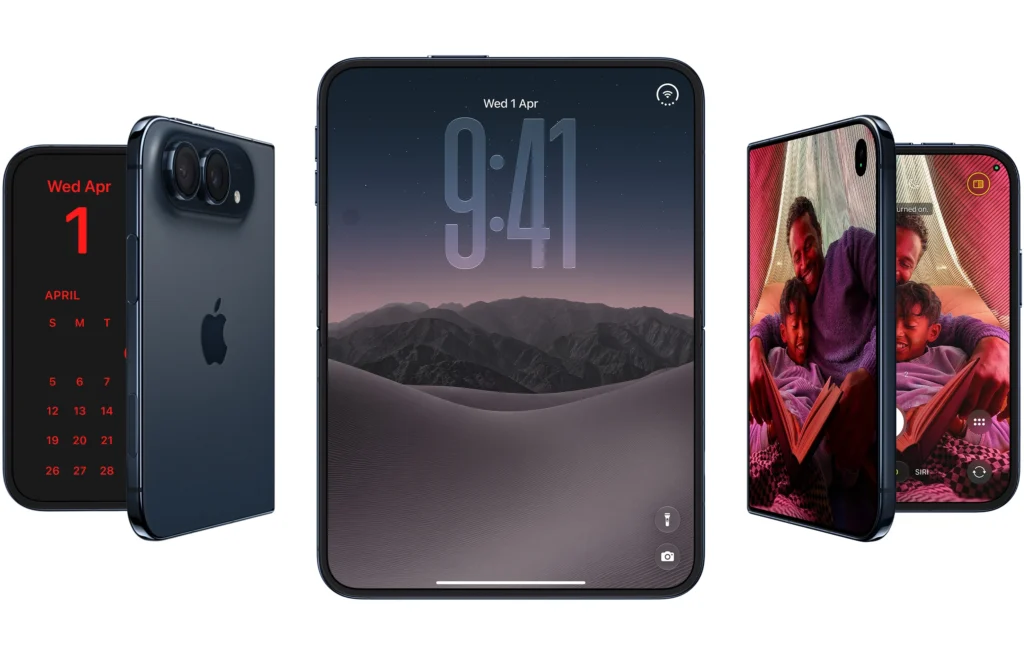
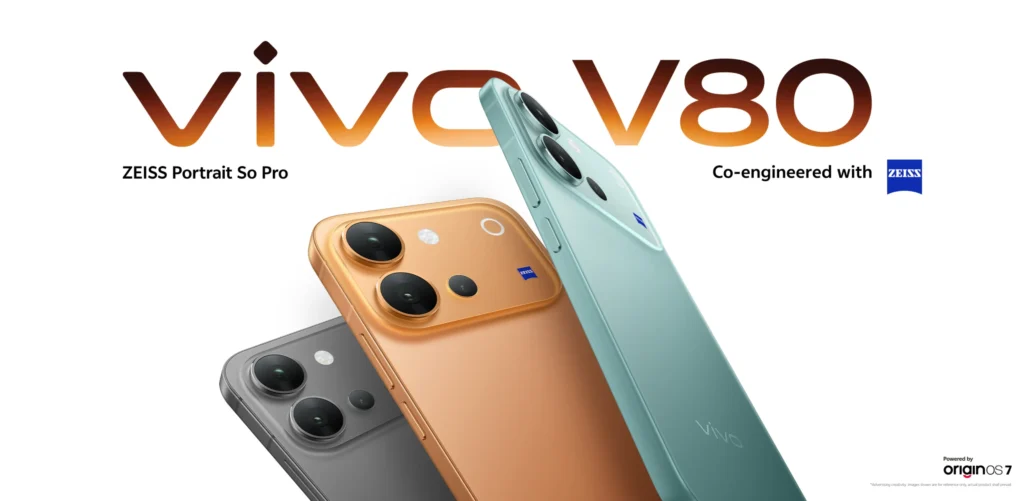
Main Camera: Vivo V80 vs iPhone Duo
The main camera is the one you will use most, so it matters most.
Vivo V80 Main Camera
The Vivo V80 uses a 50MP Zeiss-tuned main sensor, reported as a 1/1.56-inch Sony LYTIA 700V, with an f/1.88 aperture and optical image stabilization (OIS). That is a large sensor for a phone at this price, and the wide aperture helps in dim light. Vivo’s Zeiss tuning aims for natural color and a pleasing portrait look, though V-series phones sometimes lean toward bright, punchy processing. Some people love that style, and some find it too edited.
iPhone Duo Main Camera
The iPhone Duo has a 48MP Fusion Main camera that Apple designed specifically for the ultra-thin foldable body. Reviewers note that on paper it resembles the main cameras on the iPhone 17 and iPhone Air, and 9to5Mac says it performs just as well as the iPhone Air’s camera in real use. Engadget describes its image quality as sharp and detailed. Apple’s processing tends to be more natural and consistent, especially for skin tones and video.
Our take: Both phones should take excellent daylight photos. The V80 offers a bigger, brighter sensor on paper, while the Duo wins on consistency and polish. If you want the most reliable point-and-shoot results, Apple has the edge. If you like vivid, portrait-friendly colors, Vivo is appealing.
Ultra-Wide Camera: Where the iPhone Duo Pulls Ahead
This is one of the biggest gaps in the comparison. The Vivo V80’s ultra-wide is an 8MP camera with a 115-degree field of view. That is fine for lan`dscapes in good light, but it will not match the main camera’s detail, and it struggles at night.
The iPhone Duo uses a 48MP Fusion Ultra Wide camera, the same resolution as its main camera. Engadget notes it also handles macro shots, and 9to5Mac says it matches the ultra-wide on Apple’s Pro line. That means sharper wide shots, better cropping flexibility, and closer color matching between lenses.
Winner: iPhone Duo. If you shoot architecture, travel scenes, group photos, or macro, the Duo is clearly stronger here.
Zoom and Telephoto: Where the Vivo V80 Wins
This category flips the story. The Vivo V80 has a 50MP periscope telephoto camera with 3x optical zoom and OIS. That is the headline feature of the phone, and Vivo pairs it with a 100mm portrait mode designed for flattering close-ups. Periscope lenses are especially useful for portraits, pets, concerts, and travel photos where you cannot walk closer.
The iPhone Duo has no dedicated telephoto camera. Apple gets 2x “optical-quality” zoom by cropping the main sensor, but that is the limit of what the Duo does well. Engadget points out that the iPhone 18 Pro has a 4x telephoto, and it reaches up to 8x optical-quality zoom. Reviewers at BGR and CNET have also called out the missing telephoto as the Duo’s biggest camera weakness at a $1,999 price.
Winner: Vivo V80. For zoom and portraits, a real telephoto lens beats a crop every time.
Selfie Camera and Video Calls
The two phones take very different approaches to selfies.
The Vivo V80 has a 50MP autofocus selfie camera with a wide-angle lens designed for group selfies. Autofocus on a selfie camera is a big plus, because it keeps faces sharp when you hold the phone at arm’s length or take shots with friends.
The iPhone Duo has a 12MP Center Stage camera on the outer display, which 9to5Mac notes is a step down from the 18MP camera on other recent iPhones. It also has an under-display camera inside the folding screen, used for FaceTime and video calls. The more interesting trick is using the 48MP rear cameras for selfies. The outer screen acts as a viewfinder, or you can open the phone fully and still see yourself while using the main camera.
Winner: It depends. For quick group selfies, the V80’s dedicated 50MP camera is great. For high-quality selfie portraits and video calls, the Duo’s rear-camera trick can produce better results, and the foldable form factor adds unique angles.
Video Quality: iPhone Duo Leads for Creators
Video is where Apple usually shines, and the Duo is no exception. It can record 4K video at up to 120fps with Dolby Vision HDR, plus it supports the Photographic Styles that Apple offers on the regular iPhone lineup. Its foldable design also lets you prop the phone like a mini camera on a table, and PhotoWorkout calls it an interesting video tool for solo creators.
The Vivo V80 records 4K video at up to 60fps, according to Vivo’s announcement, and the front camera can also record 4K at 60fps. That is excellent for a mid-ranger, but it does not match Apple’s frame-rate options or color pipeline. Stabilization on both phones is solid, although Engadget notes the Duo uses an older generation of sensor-shift stabilization than the iPhone 18 Pro.
If you edit videos for YouTube, TikTok, or Instagram, you will probably care more about editing tools than the raw footage. Check our guide to the best AI video editing tools for creators to see which apps can make either phone’s footage look professional.
Winner: iPhone Duo.
Low-Light and Night Photography
Night photos depend on sensor size, lens aperture, stabilization, and software processing. On paper, the Vivo V80 has a large main sensor, a bright f/1.88 aperture, and OIS on both the main and telephoto cameras. Vivo also markets its telephoto as a night-capable lens. That is a strong setup.
The iPhone Duo’s main camera should perform well in low light thanks to Apple’s computational photography, and reviewers describe the image quality as sharp and detailed. The ultra-wide camera is also much more capable at night than the V80’s 8MP ultra-wide.
Without side-by-side lab tests, we would call this one close. Expect the V80 to do well with its main and telephoto lenses, and the Duo to do better with consistent results across all lenses.
AI Camera Features
Both phones lean heavily on AI, which is a major reason why we cover them alongside other AI tools on Techloopy.
Vivo V80: The phone ships with more than 30 AI creative features, including portrait effects and editing tools, and it runs Vivo’s OriginOS 7 based on Android 17. These tools can be fun for social media, but results can vary.
iPhone Duo: Apple adds Smart Take, which automatically takes photos when it detects a pose, and Kid Cue, which uses animations on the outer screen to get children to smile. The outer display can also show subjects a live preview of the shot. Apple’s AI tends to focus on helpful, subtle improvements rather than flashy filters.
Our take: If you like creative filters and experimenting, the V80 offers more variety. If you prefer practical tools that improve photos without changing your style, the Duo is more refined.
If you write about your photos or run a travel or tech blog, pairing your phone camera with the right software matters. Our roundup of the best AI writing tools for bloggers can help you turn your best shots into articles.
Design, Display, and Battery: How They Affect Photography
Camera hardware is only part of the story. A few other differences matter for everyday shooting:
- Display: The V80 has a 6.59-inch 144Hz AMOLED screen. The Duo has a 7.6-inch foldable inner display and a 5.4-inch outer display, which gives you a larger canvas to review and edit photos.
- Battery: The V80’s 7,200mAh battery and 90W charging make it a better phone for a long day of shooting. The Duo’s battery is smaller, though reviewers like its battery life.
- Form factor: The Duo’s foldable design allows hands-free shooting and tabletop angles that a regular slab phone cannot match.
- Weight: Foldables are heavier, and Engadget lists weight as a downside of the Duo.
Price and Availability for US Buyers
This is where the comparison gets practical. The iPhone Duo starts at $1,999 in the US and is sold through Apple, carriers, and major retailers. You get full warranty support, carrier compatibility, and Apple’s software updates. Stock was reported as limited early on, so check availability.
The Vivo V80 launched in India on October 6, 2026 at about Rs 62,999, which works out to roughly $740 in reports, and it is rolling out gradually in other regions such as Southeast Asia and the Middle East. Vivo does not officially sell phones in the United States, so buying a V80 would mean importing it. That can bring problems: weaker or missing support for some US 5G bands, limited warranty service, and no carrier certification. Always confirm network compatibility with your carrier before considering an import.
If your budget is closer to $300 and you want a solid camera from a brand you can buy in America, read our guide to the best budget smartphones under $300. If you want Google’s take on camera and AI tools, see our Google Pixel 11 review.
Which Phone Should You Buy?
Buy the iPhone Duo if:
- You live in the US and want an officially supported phone
- You care most about video quality and Apple’s ecosystem
- You want a high-resolution ultra-wide and macro camera
- You want a foldable that doubles as a tablet
- Price is not your main concern
Want more detail? Our own iPhone Duo review covers the phone in depth.
Buy the Vivo V80 if:
- You live in a region where it is officially sold, such as India or Southeast Asia
- You love zoom, portraits, and telephoto shots
- You want a huge battery and very fast charging
- You want a camera-first phone at a much lower price
Consider something else if:
- You are in the US and want great zoom without spending $2,000
- You do not want to risk an import
- You mainly need a reliable everyday phone
Tips for Better Phone Photos on Any Device
The best camera is the one you know how to use. These tips work on both phones:
- Clean your phone lens. A fingerprint smudge on your camera lens is the most common cause of hazy photos.
- Use natural light. Shoot near windows or during golden hour.
- Tap to focus and adjust exposure. Slide to brighten or darken the shot.
- Use the right lens. Try the telephoto for portraits and the wide lens for scenery.
- Hold steady. Brace your arms or use a small tripod for night shots.
- Shoot in the highest quality. You can always crop later.
- Edit lightly. Small tweaks to brightness, contrast, and color often beat heavy filters.
- Back up your photos. Use cloud storage or your computer so you never lose memories.
Frequently Asked Questions
Which phone has the better camera, the Vivo V80 or the iPhone Duo?
It depends on what you shoot. The Vivo V80 wins for zoom and portraits thanks to its 50MP 3x periscope telephoto, while the iPhone Duo wins for video, ultra-wide shots, and overall consistency. For most US buyers, the Duo is the practical choice because it is officially sold here.
Does the iPhone Duo have a telephoto camera?
No. The iPhone Duo has two rear cameras: a 48MP main camera and a 48MP ultra-wide. It offers 2x optical-quality zoom by cropping the main sensor, but it does not have a dedicated telephoto lens.
How many megapixels is the Vivo V80 camera?
The Vivo V80 has a 50MP main camera, a 50MP periscope telephoto camera, and an 8MP ultra-wide camera on the back, plus a 50MP selfie camera on the front.
Is the Vivo V80 sold in the United States?
Not officially. Vivo does not sell phones directly in the US, so the V80 would be an import. If you consider that route, check 5G band support, warranty coverage, and return policies carefully.
How much does the iPhone Duo cost?
The iPhone Duo starts at $1,999 in the US, making it Apple’s most expensive iPhone to date. Higher storage options cost more.
Which phone is better for video?
The iPhone Duo is better for video. It records 4K at up to 120fps with Dolby Vision HDR, while the Vivo V80 records 4K at up to 60fps. Both are good, but Apple has an edge in frame rates and color.
Can I take my selfies with the iPhone Duo rear cameras?
Yes. The 48MP rear cameras can be used for selfies. The outer screen acts as a viewfinder, and when you open the phone you can still see yourself while using the main camera.
Is the iPhone Duo worth $1,999 for the camera alone?
Probably not, if the camera is your only reason. The camera is very good but not Apple’s best, and the iPhone 18 Pro has better zoom hardware. The Duo makes more sense if you also want the foldable screen and multitasking.
Final Thoughts
Our Vivo V80 vs iPhone Duo camera comparison shows two phones with very different goals. The Vivo V80 gives you a real telephoto lens, a big battery, and flashy AI effects at a far lower price, but it is not a realistic option for most US shoppers. The iPhone Duo offers excellent video, a sharp 48MP ultra-wide, and a polished experience, but it costs $1,999 and lacks a telephoto camera. Whichever you choose, check real-world sample photos, compare prices, and buy from a trusted seller. For more honest guides on tech, phones, and AI tools, keep exploring Techloopy.
About the Author
Techloopy Team writes about tech, smartphones, gadgets, and AI tools for readers across the United States. At Techloopy, our goal is to turn complicated technology into clear, practical advice you can use right away. We compare specs, track launches, and share honest buying guides to help creators, families, and small businesses spend smarter. Visit Techloopy for more phone comparisons, gadget news, and AI tools updates. You can also read our look at the top 5 gadgets launching this month.
Disclosure: This article is for informational purposes. Specs, prices, and availability can change, and details may vary by region, so please verify current information with the manufacturer or retailer before buying. If Techloopy earns a commission from any links in the future, we will disclose it clearly.